
Rereading Daughter of the Continent in the Xi Jinping Era
-
Writer
Eun-kyung Kwak
-
 Xi Jinping, President of China, laid the groundwork for long-term rule in 2018 by removing constitutional language limiting presidential terms. Brandishing the “Chinese Dream” of restoring China’s past glory, he also inserted the phrase “Xi Jinping Thought on the New Era” into the constitution, as if to display the strength of his personal rule.
A fever for studying Xi Jinping Thought has swept through government institutions, schools, and other organizations, and even a collection of “Xi Jinping quotations” has been compiled. Such scenes recall Mao Zedong, who led the Cultural Revolution. Both inside and outside China, concerns are being raised that the country may be reverting to the era of Maoist dictatorship.
China is a neighboring country with which we have shared a long history, but its recent political developments are unsettling to surrounding nations. Properly understanding the Xi Jinping government and the situation in China is more important than ever from the standpoint of international relations. China’s modern and contemporary history, centered on Mao Zedong, tells us how we should view China today.
Jung Chang’s Wild Swans is an autobiographical novel that vividly depicts China during the warlord era, the civil war between the Nationalists and the Communists, and the Cultural Revolution. The stories of three generations of women—her grandmother, who was the concubine of a warlord general; her mother, who was a Communist Party member; and the author herself, who joined the Red Guards during the Cultural Revolution—cut through the entirety of modern Chinese history.
Born to parents who were devoted Communist Party members, the author was captivated by the deified ideas of Mao Zedong, joined the Cultural Revolution, and willingly became a Red Guard. But she was shocked when she came to realize that tens of thousands had lost their lives and been sacrificed because of his dictatorial power. Wild Swans, a novel that vividly captures Mao Zedong the dictator and China during the Cultural Revolution, emerged from that background.
Mao Zedong won support from many people by presenting a vision of creating a “fair society.” Yet his political experiments ended in failure. In the process, countless Chinese people were forced to endure hunger, misery, and chaos. The author points out that Mao Zedong was not only ignorant of economics but also no more than a dreamer who ignored reality.
Mao Zedong’s most representative experiment was the Great Leap Forward. Declaring that China would become a heavy industrial power surpassing the Soviet Union, Mao ordered peasants to melt down all their dishes and farm tools in furnaces to produce steel. During the Great Leap Forward, the author, then six years old, had to pick up nails, scraps of iron, and other metal objects she found on the ground on her way to and from school.
Teachers had to stir the furnaces installed at schools day and night to keep the fires from going out, making proper classes virtually impossible. Farmers, meanwhile, were deprived of both their tools and their time for farming as they struggled to meet their assigned steel quotas. The result of the Great Leap Forward was a great famine. Tens of millions starved to death, and countless mountains were stripped bare as people gathered firewood to feed the furnaces. The steel produced at such enormous human cost was so soft and useless that it was derisively called “pig iron.”
Mao Zedong also launched the Cultural Revolution to strengthen his power. Its stated justification was to eliminate old customs and capitalist sympathizers in order to consolidate communism, but in reality the main targets of the purge were artists, writers, scholars, and Communist Party members. The author’s parents, who had devoted their lives to the Communist Party, also became victims of the Cultural Revolution and suffered abuse and torture. Her father was so traumatized by the ordeal that he developed mental illness. Repeating to himself, “I joined the Communist Party to create a just society. But what help did my efforts bring to the people?” he left behind the final admonition never to trust the Communist Party.
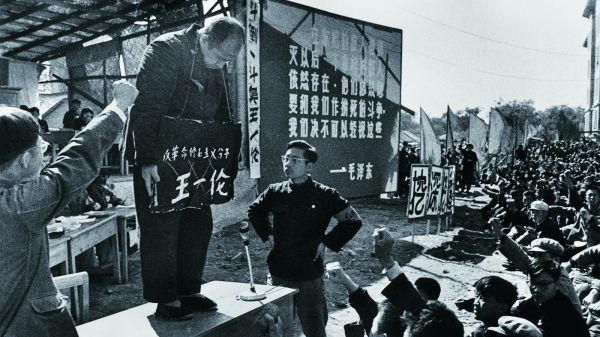
Scenes of people’s tribunals led by the Red Guards. The Cultural Revolution was a dark age for the Chinese people.
A firsthand testimony to the inhumanity of the Cultural Revolution
For the Chinese people, the years of the Cultural Revolution were an unbroken succession of fear and misery. Many were forced into the Down to the Countryside Movement, which compelled them to go to rural areas and “learn revolution” through manual labor. The author writes that during this period she spent 10 hours in the fields doing work that could have been finished in 5, simply in order to receive a day’s wages. She also gathered firewood for two hours before breakfast and came face to face with the shocking reality that the trees on the hills had all disappeared after the Great Leap Forward. Mao Zedong’s policies, which had been packaged as glorious successes, were in fact closer to disasters, and it was from this point that she began to feel hostility toward him.
It was Deng Xiaoping who rescued China from the chaos brought on by the Great Leap Forward and the Cultural Revolution. Taking an openly pragmatic line, he said, “It doesn’t matter whether a cat is black or white, as long as it catches mice.” Wild Swans shows that when steel production and economic policy targets dictated by Communist Party directives were halted and the principles of the market economy were introduced across agriculture, commerce, and other sectors, the starvation of the great famine was miraculously resolved within just two years.
Deng Xiaoping halted unnecessary political campaigns and pursued policies faithful to market principles. In fact, China recognized private property rights in 1998 and allowed freedom to start businesses; within 40 years, its GDP surged 200-fold, and it rose to the ranks of the G2. What the Chinese people truly needed was neither Communist Party planning nor Mao Zedong’s “equal distribution,” but recognition of private property so that they could keep what they earned through their own work.
Wild Swans also calmly portrays how human freedom is obliterated under Mao Zedong’s Communist Party and dictatorship. The Communist Party claimed to stand for an equal society, but in reality the state controlled all information and granted privileges according to rank. At one time, people of lower class status were even forbidden to take hot showers, and the size of one’s home and whether it had a toilet were also determined discriminatorily by rank. Needless to say, personal free time and private space were forbidden.
The author describes Mao Zedong as having treated the people as the ultimate weapon for dictatorship. By continually creating class enemies, he encouraged political struggles and made people hate one another, using that hatred as a tool of rule. After the harvest, taxes were deducted from the grain produced and the remainder distributed, so farmers carefully watched one another’s work so as not to be cheated or exploited. No one wanted to work harder than others, and conflicts among people never ceased. The experiment in building an “equal society” in fact resulted in the destruction of humanity itself.
Author Jung Chang was born the daughter of a Communist Party cadre and joined the Cultural Revolution as a Red Guard at the age of 14. She was sent down to the countryside and experienced rural life, then worked as a barefoot doctor, a foundry worker, and an electrician before entering the English literature department at Sichuan University. While working as a university lecturer, she went to Britain in 1978 on a government scholarship and became the first Chinese person to receive a doctorate in the UK. There, she finally experienced freedoms she had never known in China and wrote Wild Swans, reflecting on her own life and that of her family.
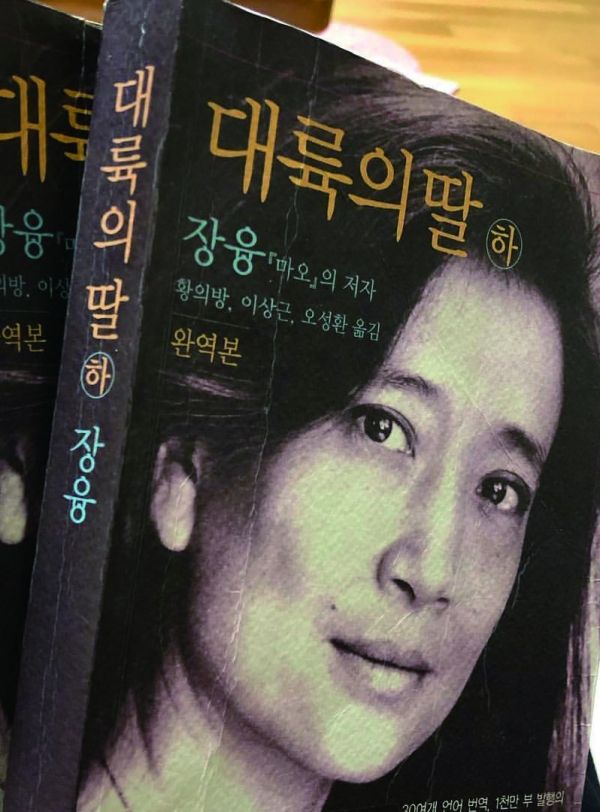
Since its publication in 1991, the book has been translated into 37 languages around the world and has become a bestseller, with more than 1.3 billion copies sold. It is highly regarded as a work that vividly shows what life was like for the Chinese people during the Great Leap Forward and the Cultural Revolution. In Korea, it was published by Kkachi Publishing in two volumes: the first tells the stories of the author’s grandmother and mother, and the second focuses on her own life.
Once one understands China under Mao Zedong, today’s China no longer seems so unfamiliar. We worry about the Xi Jinping government’s moves—such as banning Christmas trees in the name of preventing social unrest and tightening control over the press and broadcasting—because history has taught us what such attempts can lead to. In the Xi Jinping era, the warning conveyed by Wild Swans is worth revisiting.
Eun-kyung Kwak
Director of Corporate Culture Division
Center for Free Enterprise (CFE)
Original title: 시진핑 시대에 다시 읽는 '대륙의 딸'
Author: Eun-kyung Kwak
Date: 2019-03-29
Source: https://www.cfe.org/bbs/bbsDetail.php?cid=press&pn=25&idx=20065