
What Was the Root Cause of the Great Depression in the United States?
-
Writer
Nam-ung Kim
-
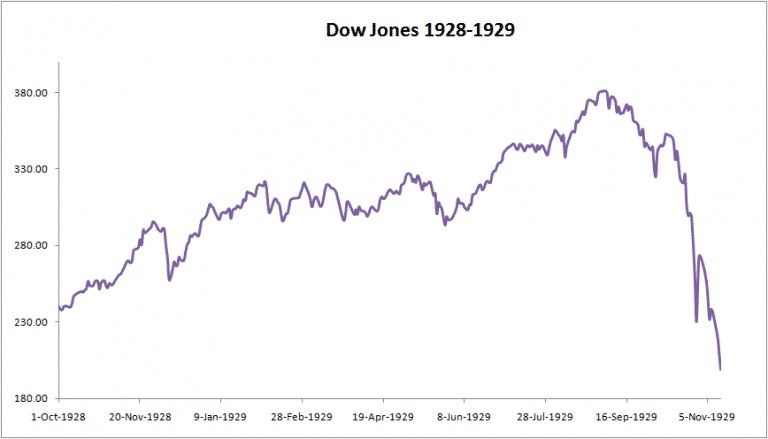
 In fact, the example most often cited by people who deny or challenge the market economy, or defend government intervention, seems to be the Great Depression in the United States. The claim is that laissez-faire ruined the American economy, and even the global economy beyond it. Even when I studied history in the United States, the Great Depression was portrayed as though it were the result of the greed and arrogance of capitalists. Many central bank officials also say that the Great Depression is proof that a central bank is necessary.
As everyone knows, before the Great Depression of the 1930s, the United States experienced an unprecedented boom known as the Jazz Age, or the Roaring Twenties. So was the Great Depression simply a historic crash following a historic boom, like what we see in crypto markets? One could view it as part of the market’s natural boom-and-bust cycle, but that was not the reality.
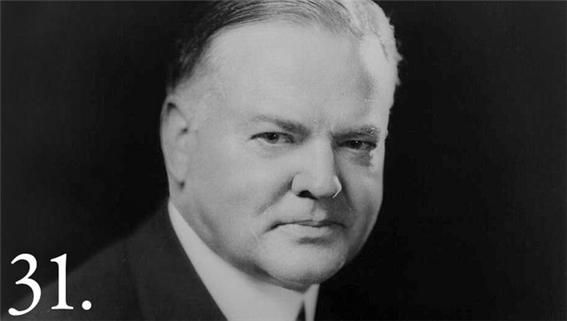
First, we need to look at President Hoover.
Herbert Hoover, a Republican president, is often depicted in history as a thoroughgoing free-market advocate. That is because he was a right-wing politician and a member of the Republican Party, which supported market principles. But this itself is a major misunderstanding.
“A chicken in every pot!”
Under this flashy slogan, Hoover promised to become an economic president who would revive the economy (it reminds one of a certain recently imprisoned figure). He appeared as if he would save the economy, but in fact became one of the chief figures who drove it into the abyss.
Smoot–Hawley Tariff
Despite a petition of opposition signed by about 1,000 economists (at times like this, one wonders what use experts really are), Hoover introduced the Smoot–Hawley Tariff with the noble intention of protecting domestic merchants and farmers, imposing tariffs on roughly 20,000 imported goods. This became the second-highest tariff in the past 100 years. As a result, countries that imported from and exported to the United States cut both imports and exports by half. Foreign countries retaliated with tariffs of their own. Consequently, total U.S. exports fell from $7 billion in 1929 to $2.5 billion in 1932, shrinking to nearly one-third of their previous level.
Hoover served as President of the United States from 1929 to 1933.
Was Hoover a small-government conservative?
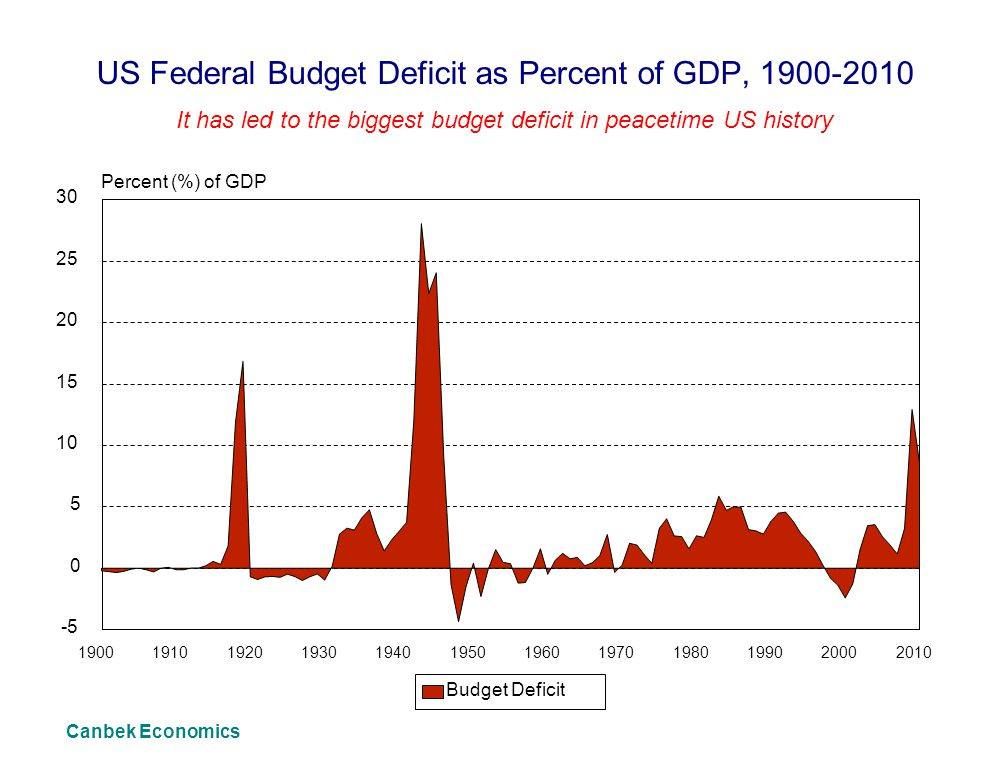
No. Before Hoover took office, the United States had been running fiscal surpluses. Federal government spending stood at $700 million, while expenditures were $3.3 billion. But within just a few years of Hoover’s inauguration, government spending surged by about 40 percent. If you look at the graph, the scale of this spending may seem modest compared with the New Deal under President Franklin Roosevelt, who dramatically expanded government spending after taking office. But Hoover was still a president who increased government spending sharply compared with his predecessors—to the point that the federal budget, which had been in surplus during the Coolidge administration, turned into a deficit.
For further explanation, it is helpful to refer to Professor Yongduk Jeon’s “A Reappraisal of President Hoover’s Economic Policies”:
He pursued a “miniature” New Deal, carrying out various public works projects on a large scale. In 1929, he approved more than $400 million for the construction of federal government buildings and about $175 million in public works spending for the Shipping Board. In July 1930, Congress approved about $915 million for public works. He also called on state governments to increase public works spending. Major civil engineering projects such as the Golden Gate Bridge in San Francisco, Hoover Dam, and the Los Angeles Aqueduct were Hoover’s work. Although public works spending during Hoover’s four years in office may be called a miniature New Deal in the sense that it was smaller than Roosevelt’s, it is said to have exceeded the total public spending of the 30 years before Hoover. (Yongduk Jeon, “A Reappraisal of President Hoover’s Economic Policies”)
America’s famous Hoover Dam was also an ambitious project launched under the Hoover administration. In truth, Hoover should be judged as a president who spent less than his successor, Franklin Roosevelt, but far more than the presidents before him.
And it was Hoover, too, who created the Reconstruction Finance Corporation in the 1930s and lent about $1 billion to troubled firms and banks.
Excessive Monetary Expansion by the Federal Reserve
Many people think the U.S. central bank was created only after the Great Depression, but that is incorrect. The Federal Reserve was established in 1913 under the Woodrow Wilson administration. In the same year, the income tax was introduced and the Internal Revenue Service was also created. That is why, for market advocates like me, President Woodrow Wilson is regarded as every bit as statist as President Franklin Roosevelt.
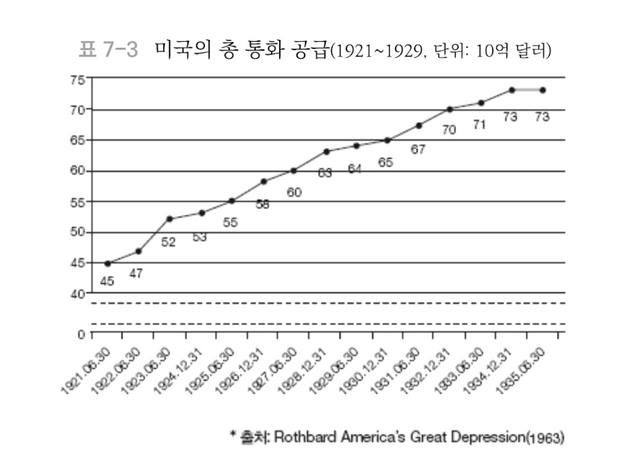
If we refer to Rothbard’s great work America’s Great Depression, it becomes clear that after the central bank was established, the United States steadily expanded the money supply. In other words, the seeds of the Great Depression were already being sown by the continued monetary expansion of the 1920s.
In Closing
Recently, many people have been invoking market failure and citing the Great Depression as an example. But in truth, even the phrase “the market fails” is far too vague. Of course there are cases where someone’s business collapses or goes bankrupt. There may also be periods in which consumption falls and investment declines. No one is claiming that adopting a market economy means everyone will automatically prosper. To think of “the market” as the agent that fails is already to ignore the axiom that only individuals act. Even so, I will respect the views of those who argue that the market economy sometimes fails. But one thing is clear: the Great Depression is not an example of market failure. Even when criticizing and condemning something, should we not at least get the facts straight?
I will end this post with a quote from Ron Paul:
“We cannot blame the market, for we have never had a real market.”
Original title: 미국 대공황의 근본적인 원인은 무엇일까?
Author: Nam-ung Kim
Date: 2019-09-03
Source: https://www.cfe.org/bbs/bbsDetail.php?cid=free_opinion&pn=18&idx=20474