
- Published Books
- About Our Publications Published Books
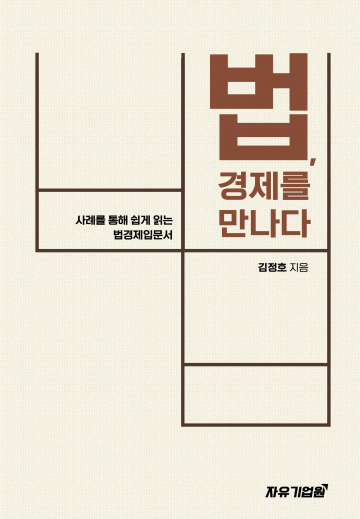
[New Release] Law Meets Economics
- Writer Jung-ho Kim Pages 312 Price 15,000won
-
Detail
Author
Jung-ho Kim
Jung-ho Kim is an influencer and economics commentator who runs “Jung-ho Kim’s Economy TV,” a leading Korean YouTube channel with over 160,000 subscribers, and serves as an Adjunct Professor at the Graduate School of Economics at Sogang University.
He has authored more than 30 books, including Private Property Rights and the Public Concept of Land, The Future of the King Dollar, and The Birth of Korean Corporations. He earned a Ph.D. in Economics from the University of Illinois and a Ph.D. in Law from Soongsil University.
He has previously served as a Visiting Professor at Yonsei University, President of The Center for Free Enterprise, a member of the National Education Commission, and the Regulatory Reform Committee, among other public roles.
To promote economic reasoning to the wider public, Kim has also been active in broadcasting. From 2015 to 2017, he appeared regularly on KBS Radio’s Empathy Debate and has participated in major televised debate programs such as KBS Late-Night Debate, MBC 100-Minute Debate, SBS Current Affairs Debate, JTBC Overnight Debate, and tvN Final Debate.
Table of Contents
Prefaces
-
Preface to the Reissued Edition
-
Preface to the First Edition
Chapter 1. Introduction
-
The Market Economy and Prosperity
-
Why We Need Market-Friendly Law
-
How This Book Is Organized
Chapter 2. Property Rights: Mine, Yours, and Ours — The Economics of Property Rights
-
Property Rights as Exclusive Rights of Use, Profit, and Disposal
-
Exclusive Rights, Private Property, and Ownerless Resources
-
Why Do We Need Private Property?
-
Dynamic Perspective (1): Promoting Production
-
Dynamic Perspective (2): Preventing the Tragedy of the Commons
-
Elephants in Kenya vs. Elephants in Zimbabwe
-
Static Perspective: Efficient Use of Resources
-
-
Private Property and Self-Interest
-
Would Banning For-Profit Hospitals Eliminate Profit-Seeking?
-
The Root Cause of Corruption in Childcare Centers, Kindergartens, and Private Schools: Disregard for Property Rights
-
Two Ways to Protect Property Rights: Absolute Protection vs. Protection Through Compensation
-
The Level of Property Rights Protection in Korea
-
The Reality of Property Rights Being Violated
-
The Two Sides of Property Rights in the Music Industry: The Recording Industry vs. the Musical Industry
-
The Costs of Property Rights Systems
-
Historical Changes in Cost–Benefit and the Evolution of Property Rights Institutions
Chapter 3. Discourage Fighting, Encourage Bargaining — The Economics of Contract Law
-
Voluntary Exchange Creates Prosperity
-
Freedom of Contract and the Commodity Economy
-
Law That Makes Contracts Real Contracts
-
Function of Contract Law (1): Preventing Opportunism
-
Function of Contract Law (2): Supplementing Incomplete Contracts
-
Function of Contract Law (3): Invalidating One-Sided Transactions
-
-
Agreements Should Come Before the Law: Problems with Competing Claims and the “Conflict of Laws” Theory
-
Intervening in Transaction Terms Creates Side Effects: Medical Fee Controls and Rice Subsidy Payments
-
Bargaining Over Prices Cannot Be Illegal: From Bean Sprout Prices to Subcontract Payments
-
If I Dislike It, Is It Automatically an “Unfair Contract”?
-
Punishing the “Gaps” Destroys Opportunity: The Economics of Franchise Contracts
Chapter 4. Love Your Neighbor as Yourself — The Economics of Tort Law and Criminal Law
-
What Is Tort Law?
-
Damage Compensation Deters Wrongdoing
-
Tort Law Works Even Without Regulation
-
When Punitive Damages Are Necessary
-
Price Cuts in Supply Contracts Should Not Be Subject to Punitive Damages
-
The Golden Rule, Duty of Care, and Tort Law
-
Negligence Liability vs. Strict Liability
-
Which Is Better: Negligence or Strict Liability?
-
Is There No Negligence If Everyone Else Does It?
-
Winning Competition Is Not a Tort
-
How Should Employer Liability Be Viewed?
-
When Criminal Punishment Is Needed Beyond Civil Damages
-
Beware of Over-Criminalization
Chapter 5. Sunlight Rights: Why Are They in Korea but Not in the U.S.?
-
The Legal Reality of Sunlight Rights in Korea
-
Countries Without Sunlight Rights: The U.S., Germany, and the U.K.
-
Social Losses Caused by Sunlight Rights
-
Four Types of Rights Related to Sunlight
-
Distribution of Building Heights by Rights Type
-
Evaluating Economic Efficiency
-
-
Negative Externalities: When Regulation Is Needed—and When It Is Not
-
On the “Tolerance Limit” Doctrine
-
A New Possibility
Chapter 6. Executives Walking on a Prison Wall — Breach of Trust and the Rule of Law
-
The Expansion of Breach of Trust Charges Against Listed Company Executives
-
Applying Breach of Trust Law Has Departed from the Rule of Law
-
How Breach of Trust Charges Change Managerial Behavior
-
Leave the Judgment of Business Decisions to the Market
Chapter 7. Leave Corporate Survival to the Market
-
A Corporation as a Collection of Voluntary Cooperative Relationships
-
Corporate Personality
-
The Market Chose the Joint-Stock Company
-
Cooperatives as Business vs. Cooperatives as Politics
-
Let the Market Decide: How Many Votes per Share
-
Circular Shareholding as a Market Outcome
-
The Truth About Circular Shareholding: The Case of Kia Motors
-
What Happens If Circular Shareholding Is Banned?
-
Why Do Most Companies Have Controlling Owners?
-
What If Professional Management Is Forced?
-
Is the Board of Directors Really the Problem?
-
How Should Cumulative Voting Be Viewed?
-
The Positive Functions of Cumulative Voting
-
The Negative Functions of Cumulative Voting
-
International Cases
-
Chapter 8. The Constitution Meets Economics
-
What Should a Constitution Do? An Economic Perspective
-
Why We Need the State
-
Why the State Is Dangerous
-
Safeguard (1): Exit
-
Safeguard (2): Constitutional Limits on State Power
-
Institutional Safeguards in the Korean Constitution
-
-
Constitutional Economic Clauses Meet Economics
-
The Clauses and Their Application in Practice
-
Review (1): The “Economic Democratization” Clause
-
Review (2): Land Use, Development, and Restrictions on Land Ownership
-
Review (3): Natural Resources Clause
-
Review (4): Science and Technology Clause
-
-
An Economic Review of Social Rights
-
Material Living Standards Clauses
-
Environmental Rights Clause
-
-
The Constitution and Economics Must Meet